
Railing Systems That Anchor Design and Safety
Deck railing installation in Lansing for elevated platforms, stair runs, and multi-level structures requiring code-compliant fall protection
A railing system fails in two distinct ways: structurally, when it gives way under lateral load, and visually, when it looks like an afterthought bolted onto an otherwise finished deck. Emerson Home Improvement, LLC installs aluminum and composite railing systems in Lansing that address both concerns, mounting posts directly into the deck's structural framing rather than surface-fastening them to the decking boards. That anchoring method is the difference between a railing that passes a load test and one that wobbles when a guest leans against it.
The installation sequence starts with post placement planning based on the deck layout, stair configuration, and span lengths between posts. Posts are positioned and secured to the framing before top and bottom rails are run, then baluster or infill panels are set within the rail system. Emerson works with powder-coated aluminum systems that are rust-resistant and visually lightweight, and with composite railing products engineered to match or complement composite decking installations. Both material types use cap surfaces that resist chipping and fading without requiring periodic painting or sealing.
Set up a consultation with Emerson Home Improvement to review your deck configuration and identify which railing system fits the structure, the use, and the visual direction you want..
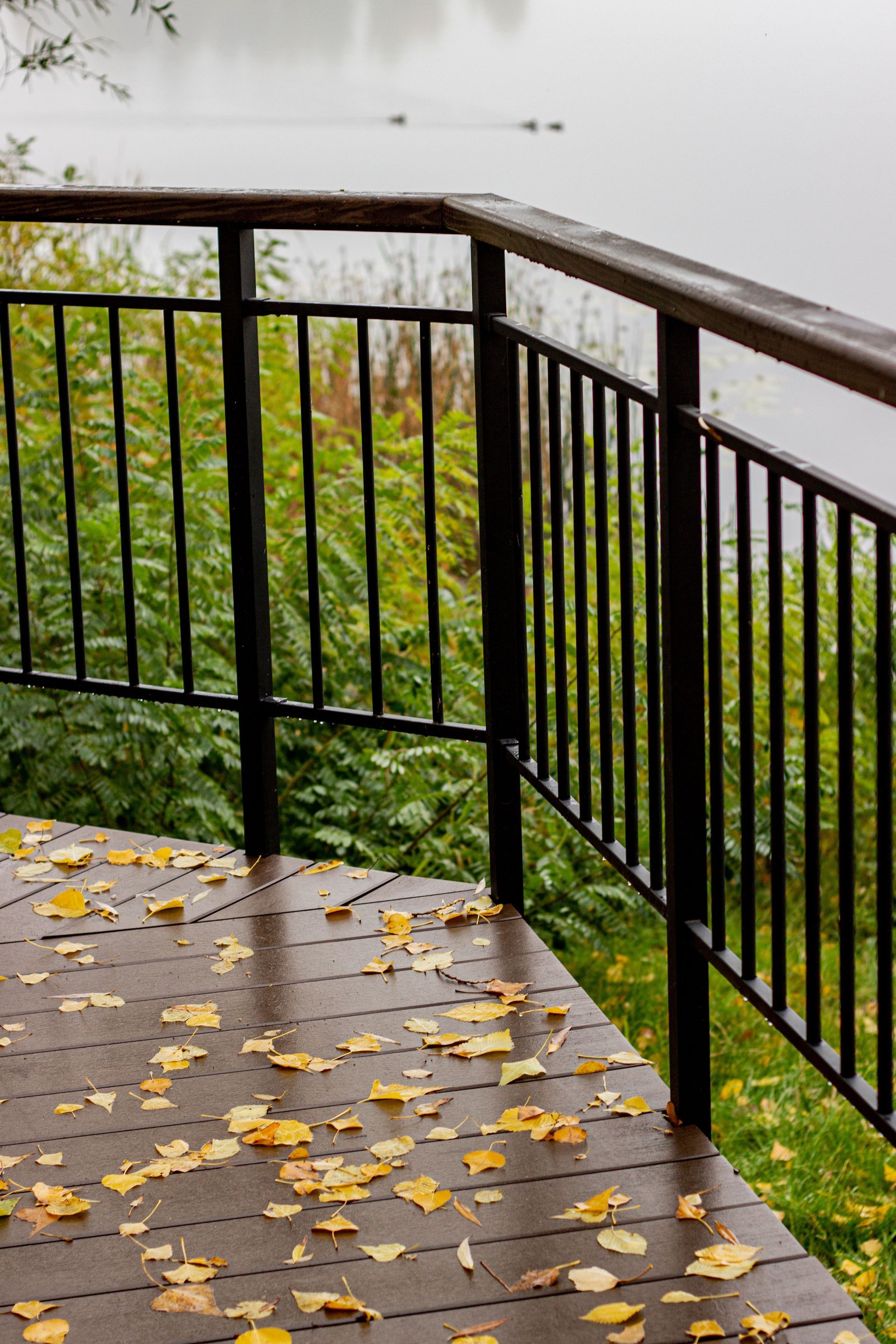
How Railing Installation Addresses Load and Code Requirements
Deck railings in Michigan are subject to IRC code requirements that specify minimum height, maximum baluster spacing, and lateral load resistance. The 4-inch baluster spacing rule prevents a 4-inch sphere from passing through any opening in the railing, which governs both baluster count and the gap between the bottom rail and the deck surface. Aluminum and composite systems designed for residential installation are engineered to these standards, but the post anchoring method determines whether the installed system actually meets the lateral load requirement. Surface-mounted post bases attached only to decking boards do not transfer load to the frame and are not a compliant installation method for elevated decks.
After railing installation, the visible change is immediate: the deck reads as a finished outdoor space rather than an open platform. Beyond appearance, the structural difference is testable. A properly anchored railing system handles lateral pressure without flexing at the post base. Homeowners can verify this by applying hand pressure at the top rail midspan between posts. Minor flex in the rail span itself is normal; movement at the post base indicates an anchoring problem worth addressing before the deck sees regular use.
Infill options within aluminum and composite railing systems include standard picket balusters, horizontal cable rail systems, and glass panel infill, each of which changes how much of the view the railing blocks and how the overall deck reads from inside the home. Cable and glass infill options require specific post sizing and spacing to handle the tension loads or panel weight, so the infill selection has to be decided before post placement is finalized. Emerson works through those decisions during the planning phase so the structure supports whatever infill the homeowner selects..
Answers About How Railing Work Gets Done
Railing questions often focus on what the installation involves and how the finished system performs, particularly for decks on older Lansing homes where the original framing may not have been built to accommodate current post anchoring requirements.
- How are railing posts anchored so they do not move under load? Posts are attached through the decking surface and into the rim joist or structural framing below using through-bolts or post-mounting hardware rated for that application. The fastening hardware carries the lateral load rather than the decking board, which is why the framing condition underneath the post location matters before installation begins.
- What is the required height for deck railings in Lansing residential construction? Decks 30 inches or more above grade require a minimum 36-inch railing height. Decks higher than 30 inches on multi-level structures may require 42-inch railings depending on the specific code interpretation applied by the local inspector. Post height selection is made based on the finished deck height above grade, measured after decking boards are installed.
- Why do aluminum railings hold up without painting when painted steel railings do not? Powder-coated aluminum uses an electrostatically applied finish baked onto the metal, which bonds to the surface rather than sitting on top of it the way liquid paint does. Aluminum also does not rust, so surface damage to the coating does not trigger the progressive corrosion that causes painted steel to fail from the inside out once the surface is scratched.
- How does the choice of infill affect post spacing? Cable rail systems require closer post spacing than picket systems because the cable tension loads are distributed across the posts rather than the rail. Glass panel systems require specific post dimensions to carry panel weight and wind load. Selecting an infill type after posts are already placed limits what will actually work structurally, which is why infill choice is a planning-phase decision rather than a finish-phase one.
- What should you check on an existing railing before deciding whether to replace or repair it? Test lateral movement at each post base with hand pressure. Check the top rail for flex between posts. Inspect post bases for corrosion, cracking, or surface-fastening methods that bypass the framing. Railings with corroded hardware or posts attached only to decking boards are candidates for full replacement rather than repair, because the anchoring failure is in the method, not just the hardware.
Emerson Home Improvement, LLC also installs railings on decks in East Lansing, Okemos, Holt, Mason, and Grand Ledge. To discuss your railing project and review post anchoring options for your specific deck structure, connect with Emerson directly to schedule a site review.