
Protecting Your Foundation from Moisture Damage
Basement Water Proofing in the Lansing area for homes experiencing water intrusion and structural risk
Water entering your basement creates immediate risks: mold colonies establish within 48 hours, floor joists absorb moisture and weaken, and hydrostatic pressure against foundation walls increases with every rain event. Emerson Home Improvement, LLC addresses basement water intrusion through systems designed to intercept water before it damages structural components. Homeowners in the Lansing area dealing with damp basements, visible water entry points, or musty odors need solutions that manage both active leaks and long-term moisture exposure.
The service involves identifying every point where water enters the basement—whether through wall cracks, floor joints, or hydrostatic pressure pushing through porous concrete—and installing an interior drainage system that captures and redirects water away from the foundation. This system works by creating a controlled pathway for water that would otherwise saturate walls, compromise footings, or pool on basement floors.
Schedule a basement evaluation to map water entry points and determine the drainage approach for your foundation type.
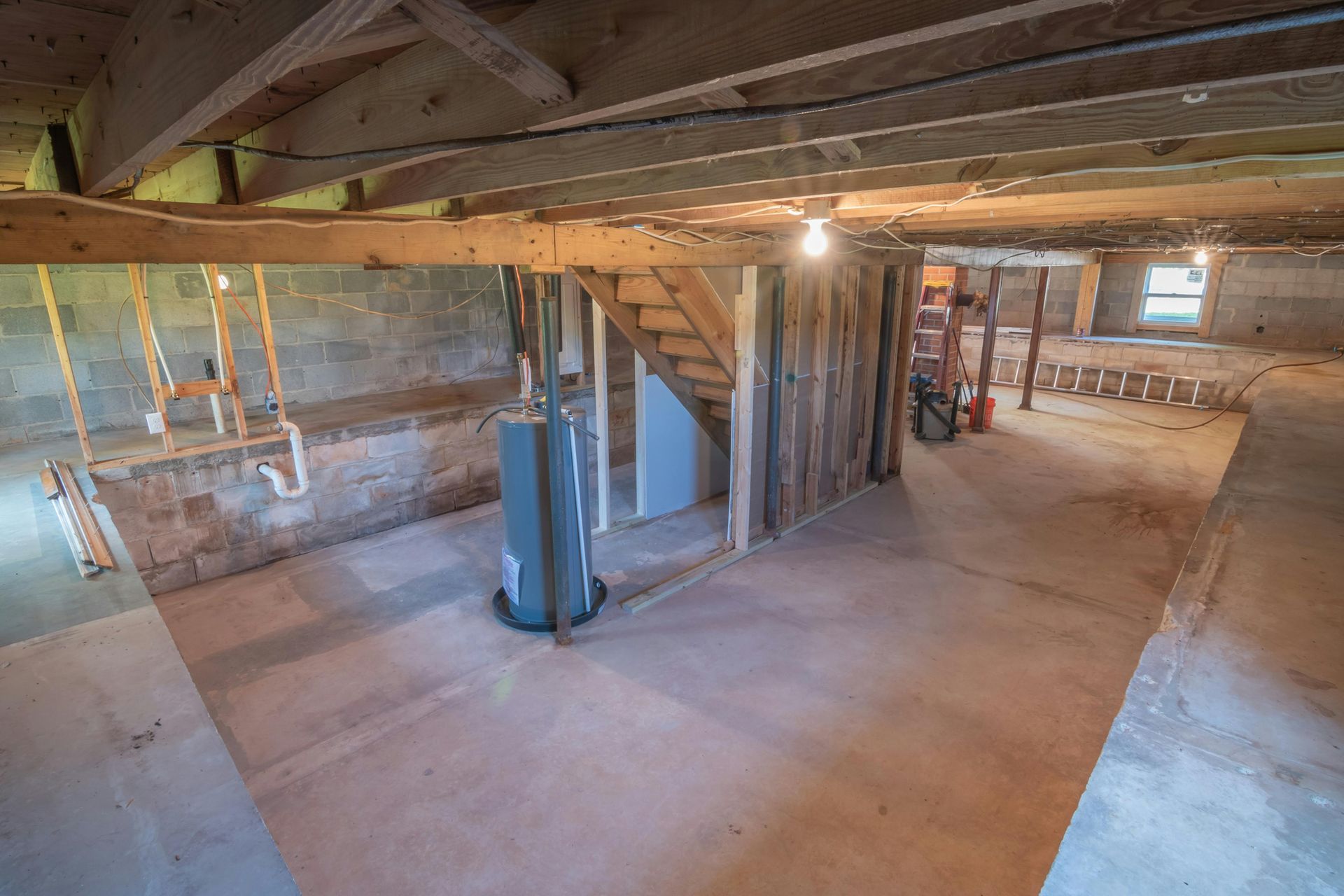
How Interior Drainage Systems Manage Water Intrusion
Interior drainage installation requires cutting a channel along the basement perimeter at the floor-wall joint, where hydrostatic pressure most commonly forces water through. Perforated pipe is placed in a gravel bed within this channel, capturing water before it surfaces and directing it to a sump basin equipped with a pump that discharges water away from the foundation. The system operates continuously during wet conditions, preventing water from ever reaching your basement floor or walls.
Once the drainage system is functional, you'll notice basement floors stay dry during rainstorms, musty odors dissipate as humidity drops, and stored items no longer show moisture damage. The concrete patch over the drainage channel cures to match existing flooring, and the sump pump cycles automatically whenever water enters the system. Mold growth stops when moisture sources are eliminated, and wooden structural components in the basement begin to stabilize as relative humidity decreases.
The installation does not address water entering through windows, exterior grading issues, or gutter problems—those require separate corrections. The system focuses exclusively on water intrusion through the foundation itself, managing hydrostatic pressure and groundwater that rises during heavy precipitation or snowmelt conditions common in the Lansing area.
Questions Homeowners Ask Before Basement Waterproofing
Basement waterproofing decisions often depend on understanding how the system operates and what conditions it addresses best.
What causes water to enter basements in the first place?
Hydrostatic pressure builds when groundwater saturates soil around your foundation, forcing water through any available opening in concrete walls or floor joints. Clay-heavy soils in the Lansing area retain more water and create higher pressure levels than sandy soils, increasing the force pushing water into basements during spring thaw and prolonged rain events.
How does an interior drainage system differ from exterior waterproofing?
Interior systems capture water after it passes through the foundation wall but before it surfaces in the basement, redirecting it to a sump pump. Exterior waterproofing requires excavating around the entire foundation perimeter to apply membrane coatings, which is more disruptive and costly but addresses water before it contacts the foundation.
What happens to the water once the system collects it?
The perforated pipe channels water to a sump basin, where a float-activated pump lifts it through discharge piping that runs to an exterior location at least ten feet from the foundation. The pump operates automatically whenever water reaches the activation level, typically cycling multiple times during heavy rain.
Will the system prevent all basement moisture problems?
The drainage system eliminates water intrusion through the foundation but does not control humidity from other sources like inadequate ventilation, leaking pipes, or condensation on cold surfaces. Dehumidification equipment may still be necessary to maintain optimal humidity levels below 60 percent.
When should I install a drainage system versus waiting to see if water problems worsen?
Any visible water entry, efflorescence on walls, or musty odors indicates existing moisture problems that will worsen over time. Foundation damage from prolonged water exposure is cumulative—early intervention prevents structural repairs that cost significantly more than drainage installation.
Emerson Home Improvement, LLC provides detailed assessments that identify your specific water entry points and explain how the drainage system addresses your foundation conditions. Request a property inspection to determine the scope of waterproofing work your basement requires.
Act now and transform your basement!